
FIGATA COMICS PRESENTS
COLLECTOR’S CORNER
Whether you’re new to comics or a longtime collector, there’s always something new to learn.
From grading and variants to barcodes, key issues, storage, and more, Collector’s Corner helps you understand the hobby and build your collection with confidence.
LEARN THE HOBBY. BUILD YOUR COLLECTION. KNOW WHAT YOU’VE GOT.
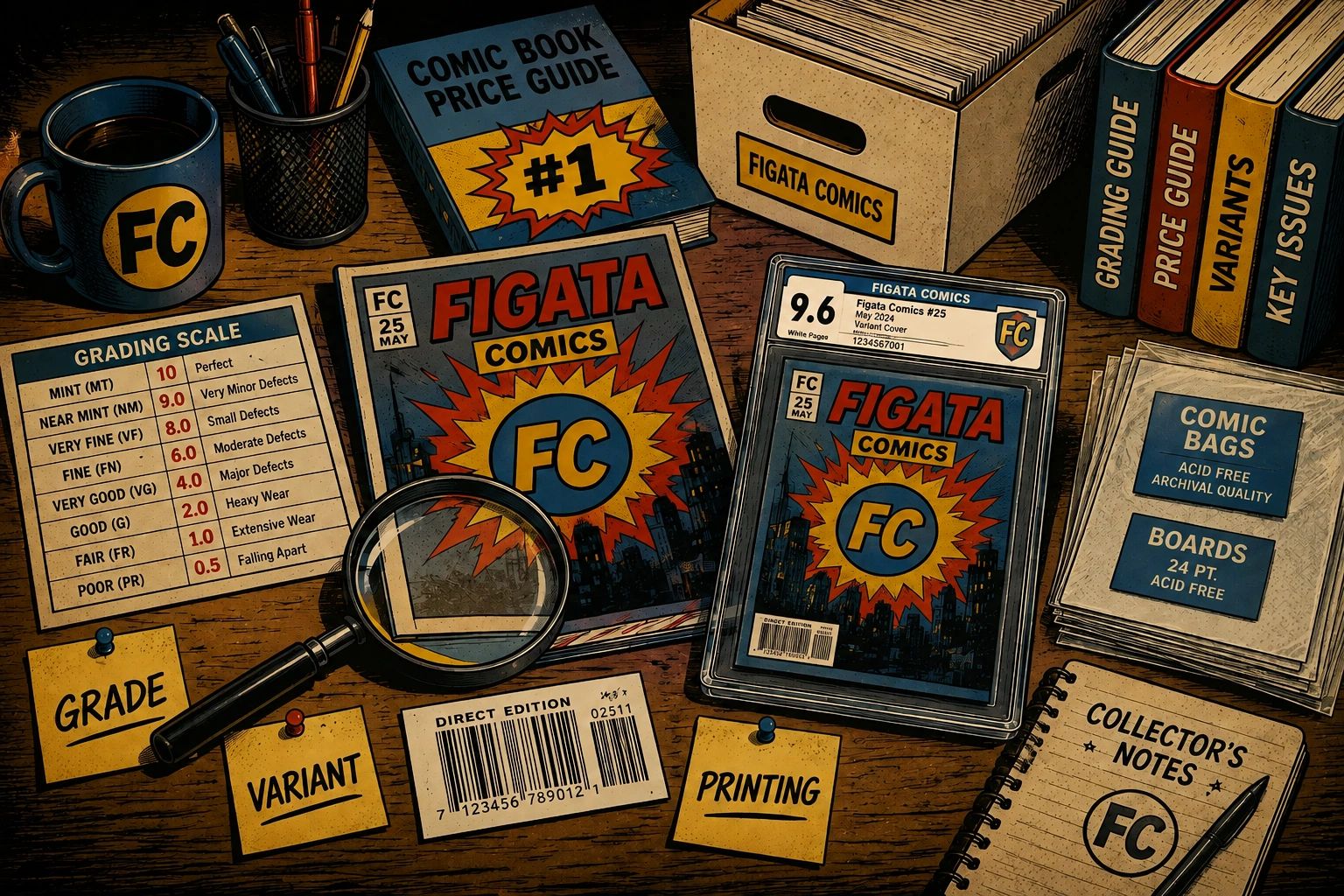
START HERE
Comic collecting doesn’t have to be complicated. Choose a topic below and let Figata Man help you learn the hobby.
GRADING BASICS
Learn what comic grades mean, recognize common defects, and better understand the condition of your books.
READING COMIC BARCODES
Learn how barcode extensions can help identify issue numbers, variants, and printings.
COLLECTOR’S GLOSSARY
From key issues and slabs to variants and first appearances, learn the language every collector should know.
Collector's Corner
COMIC GRADING BASICS
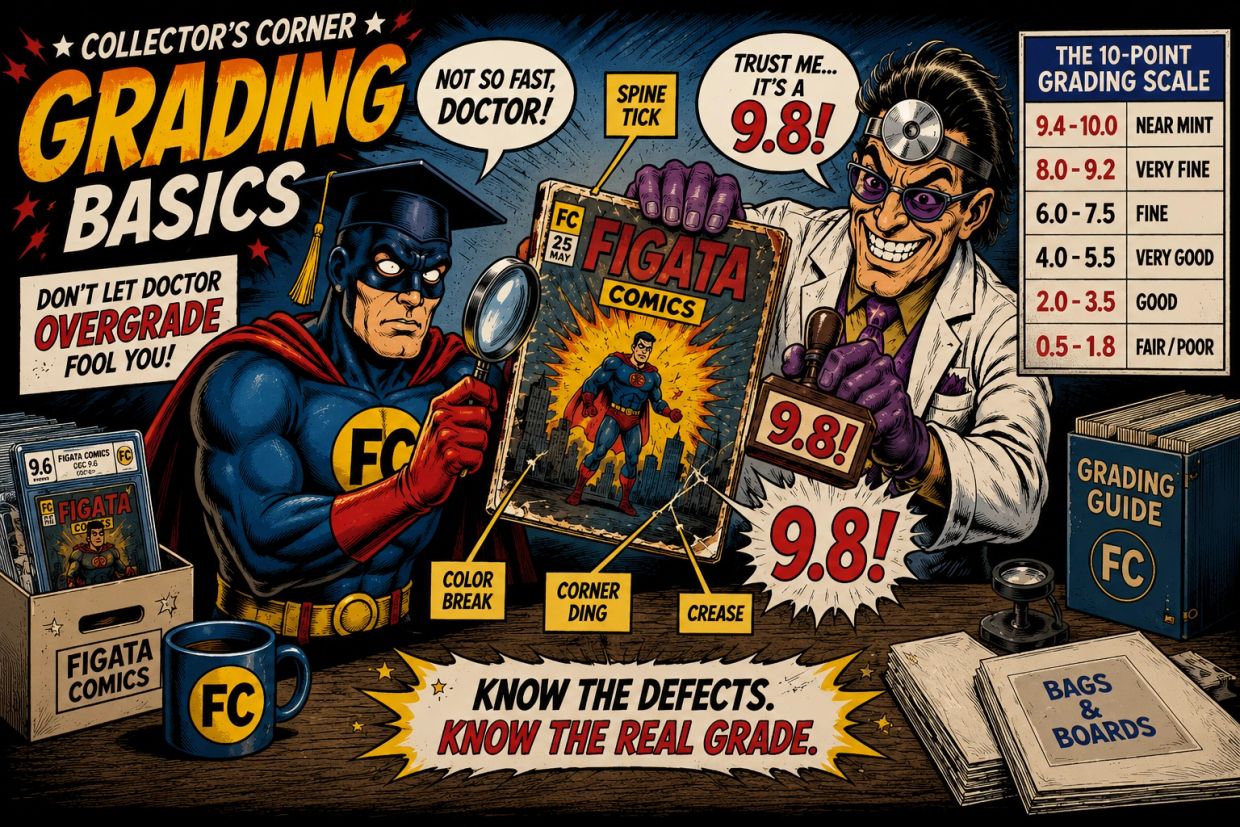
Comic grading is the process of evaluating a comic book’s condition. Grades generally run on a 0.5 to 10.0 scale, with higher numbers representing books in better condition.
When grading a comic, look at the entire book — not just the front cover. Examine the spine, corners, edges, back cover, staples, pages, and overall structure.
Common defects that can affect a grade include spine ticks, color-breaking creases, corner dings, tears, stains, writing, missing pieces, staple problems, and other signs of wear.
A comic that looks beautiful at first glance may still have defects that lower its grade. Small differences in condition can become especially important in higher grades.
COMMON GRADE RANGES
9.4–10.0 — Near Mint
Exceptional condition with very little noticeable wear.
8.0–9.2 — Very Fine
An attractive copy with minor defects or light wear.
6.0–7.5 — Fine
Above-average condition with noticeable but moderate wear.
4.0–5.5 — Very Good
A complete, presentable comic showing obvious signs of handling and wear.
2.0–3.5 — Good
Significant wear and defects, but generally still complete and readable.
0.5–1.8 — Fair / Poor
Heavy wear, major defects, or potentially missing or damaged components.
Remember: grading has a subjective element. Two experienced collectors may not always assign exactly the same grade to the same comic.
Collector Tip: These ranges are intended as a general introduction to comic grading. Professional grading companies and experienced collectors may use more detailed criteria when evaluating a book.
FIGATA MAN’S QUICK GUIDE
CHECK THE WHOLE BOOK!
🔎 SPINE — Look for ticks, splits and stress.
📐 CORNERS — Check for bends, blunting and creases.
📖 COVER — Look for color breaks, tears, stains and wear.
📎 STAPLES — Check that the cover and pages remain securely attached.
📄 PAGES — Look for tears, missing pieces, writing or other damage.
FIGATA MAN SAYS:
“Don’t grade the comic you wish you had. Grade the comic that’s actually in front of you!”
COLLECTOR'S CORNER
READING COMIC BARCODES
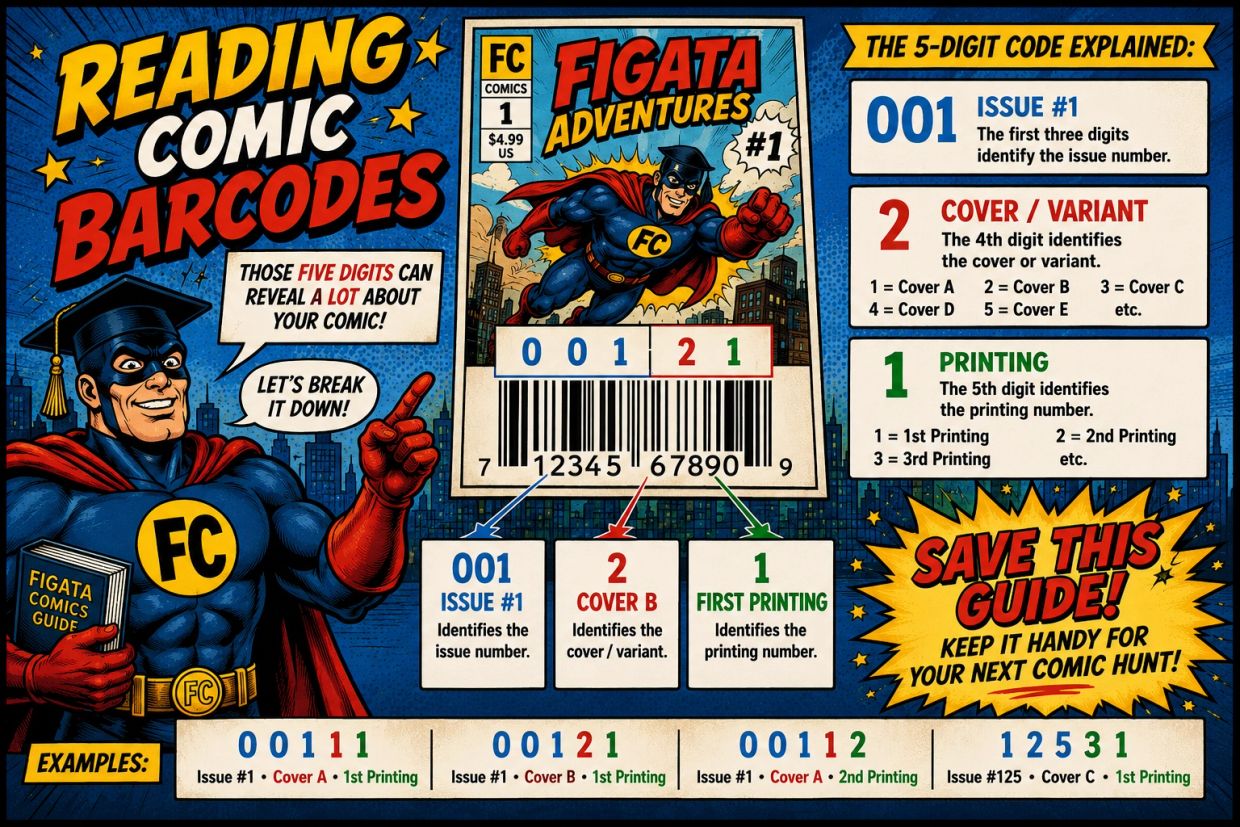
Comic barcodes can reveal useful information about the book you’re holding. On many modern comics, the five-digit extension beside the main UPC can help identify the issue number, cover or variant, and printing.
For example, take the code 00121:
001 — ISSUE NUMBER
The first three digits identify the issue.
001 = Issue #1
2 — COVER / VARIANT
The fourth digit commonly identifies the cover version.
2 = Cover B
1 — PRINTING
The fifth digit commonly identifies the printing.
1 = First Printing
So 00121 can be read as:
ISSUE #1 • COVER B • FIRST PRINTING
Knowing how to read these numbers can be especially helpful when comparing variants, later printings, and multiple copies of the same issue.
Collector Tip: Barcode conventions can vary by publisher and era, and exceptions do occur. Use the barcode as a helpful identification tool — and when in doubt, research the specific comic.
📱 SAVE THE GUIDE ABOVE!
Keep it on your phone for quick reference while shopping, sorting your collection, or digging through long boxes.
COLLECTOR'S CORNER
COLLECTOR'S GLOSSARY
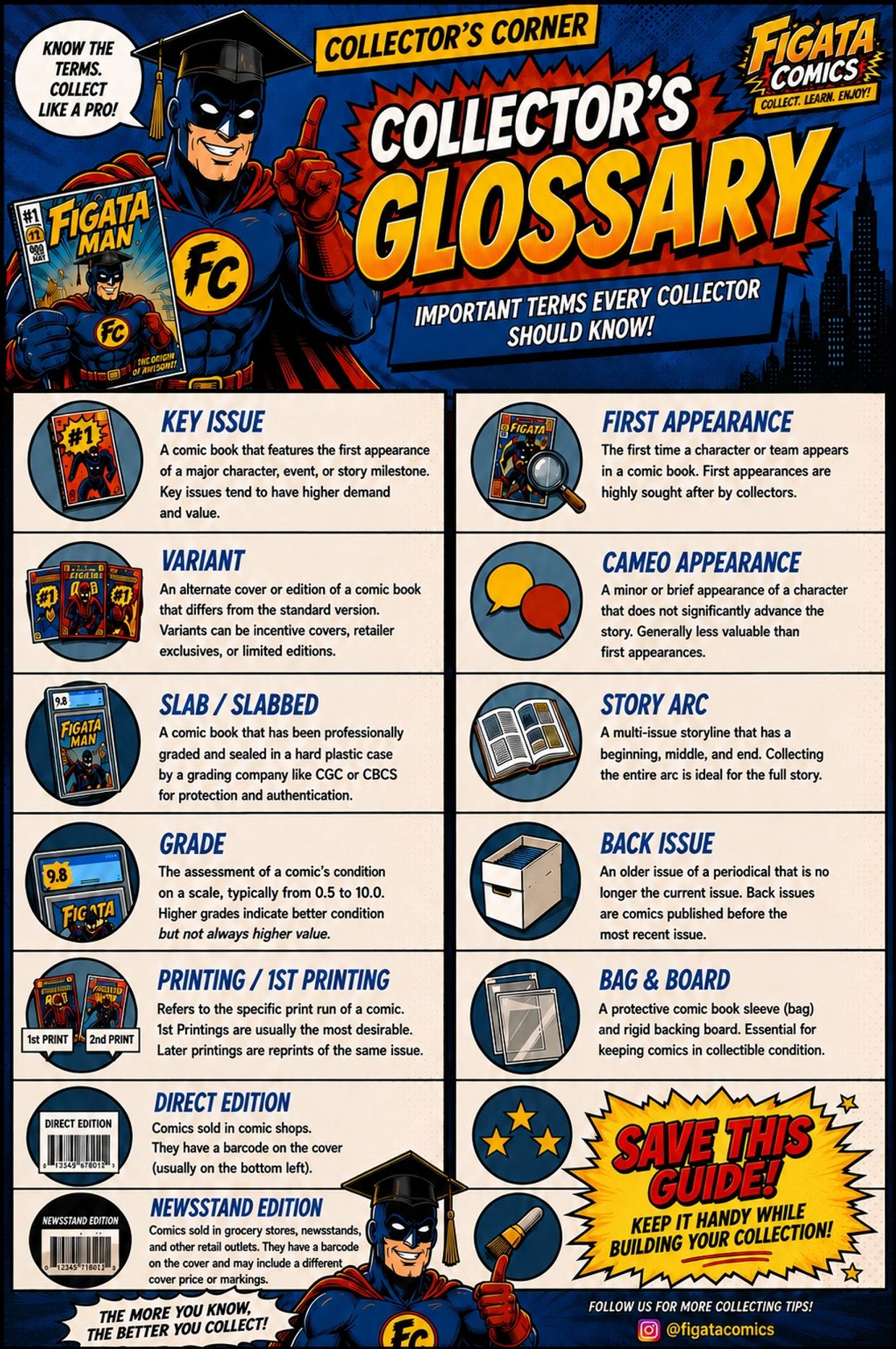
Comic collecting has its own language. Understanding common terms can make it easier to identify books, compare editions, research your collection, and know exactly what other collectors and sellers are talking about.
The guide above covers some of the terms you'll encounter most often. Here are a few more worth knowing:
RAW
A comic that has not been encapsulated in a third-party grading holder. Raw comics may still be graded informally by collectors or sellers.
ONE-SHOT
A comic designed as a single, self-contained issue rather than part of an ongoing series.
ANNUAL
A special issue traditionally published in addition to a comic's regular series, often larger or featuring additional stories.
INCENTIVE VARIANT
A variant cover that retailers may qualify to order by meeting specific ordering requirements established for that release.
VIRGIN VARIANT
A variant cover that typically removes most or all logos, titles, and trade dress so the artwork dominates the cover.
FACSIMILE EDITION
A modern reproduction designed to closely resemble an earlier comic, often recreating the original cover, interior stories, and other period details.
RUN
A sequence of consecutive issues from a comic series. A complete run contains every issue within the defined sequence.
GRAIL
Collector slang for a particularly desirable comic someone personally hopes to own. One collector's grail may be completely different from another's.
Collector Tip: Comic terminology can vary by publisher, era, marketplace, and collector. When identifying a specific edition, use multiple clues—including the cover, indicia, barcode, publication information, and reliable reference sources.
📱 SAVE THE GUIDE ABOVE!
Keep it handy while shopping, researching, organizing your collection, or digging through long boxes.